
Fitting Bigger Wheels: What Has to Stay the Same, What Changes, and What It Costs

A customer arrived with a set of 20-inch wheels in the boot, bought that morning from a wheel shop, and asked for "the same tyres, but for 20s". The wheels were beautiful. The car had left the factory on 17s. Whether that was a good idea, and which tyres it needed, took a longer conversation than he expected - and it is one we have several times a week, so here it is in full.
Fitting bigger wheels is a legitimate thing to do to a car. Done properly, it looks the way the owner wanted and drives fine. Done casually, it throws the speedometer out, overloads the tyres, rubs the arches and turns every speed bump in the Emirates into a threat to the rims. The difference is a handful of rules.
The one rule everything else follows from
The overall diameter of the wheel and tyre together - the rolling diameter - has to stay very close to what the car was built with. A bigger wheel therefore needs a tyre with a shorter sidewall, so the two together come out the same height. That is all "plus-sizing" means: plus one inch of wheel, minus a matching amount of sidewall.
Why it matters is not cosmetic. The car's speedometer, odometer, anti-lock brakes and stability control all work from how fast the wheels are turning, and they were calibrated for the original diameter. A larger diameter means the wheel turns fewer times per kilometre, so the speedometer reads lower than your true speed and the odometer under-counts. The tyre also sits closer to the arch and the suspension, and on a four-wheel drive a change made at one end only puts a mismatch into the drivetrain that it was never designed for.
The rule of thumb tyre makers and the size calculators use is to keep the new rolling diameter within about 3 percent of the original, and closer is better. Here is what that looks like from a very common starting size:
- 205/55 R16 - the original: about 632 mm overall
- 225/45 R17 - plus one: about 634 mm
- 225/40 R18 - plus two: about 637 mm
- 235/35 R19 - plus three: about 647 mm
All within 3 percent. Notice the pattern: as the wheel grows, the middle number - the sidewall height as a percentage of the width - falls, and the tyre usually gets a little wider to keep the diameter and the load capacity up. If you want to check a combination yourself, the sidewall height is the width multiplied by that middle number, and the overall diameter is twice the sidewall plus the wheel diameter in millimetres - or send us the two sizes and we will do it. Our guide to reading a tyre size explains the string.
What has to stay the same: load and speed
The number and letter after the size - the load index and the speed rating - are not allowed to drop. The door placard says what the car needs; the registration test compares the fitted tyres against it, and a tyre rated below the placard for load or speed is a fail, as the UAE tyre rules set out. Speed ratings and load index explained covers what the codes mean.
This is the rule that catches people, because a shorter sidewall can carry less load in its standard version. Take the example above: 205/55 R16 is commonly load index 91. The plus-two size, 225/40 R18, is load index 88 in its standard form - below the placard - which is why it is nearly always sold as an XL, or extra load, version at 92. The same applies to most low-profile sizes: assume you need the XL version unless the numbers prove otherwise, and check the load index on the tyre you are actually buying, not the size in the abstract.
What changes, honestly
Assuming the diameter and the ratings are right, a bigger wheel and a lower-profile tyre change the car in ways the showroom does not mention:
- The ride gets firmer. The sidewall is part of the car's suspension. Less of it means less cushioning over expansion joints, manhole covers and the speed bumps that appear every few hundred metres in residential Sharjah and Dubai. This is the change owners most often regret.
- Rims and sidewalls get more vulnerable. A pothole or a kerb that a 55-profile tyre absorbs can bend a 20-inch rim or pinch a 35-profile sidewall against it. Bent rims and sidewall bulges are a real cost of large wheels on UAE roads, and a bulged tyre is replaced, not repaired.
- Tyres cost more and there is less choice. Low-profile sizes in 19 and 20 inches sit mostly in the premium and performance ranges, and the value brands cover fewer of them. Budget a full set before you buy the wheels, not after.
- Weight, fuel and noise. Bigger wheels are usually heavier, which the suspension and the fuel economy both notice, and a wider, lower tyre is typically louder on coarse tarmac.
- Grip changes, both ways. A wider tyre can corner harder on a dry road and can also follow ruts and grooves more, which drivers feel as tramlining. In standing water it is more prone to aquaplaning than a narrower one, which matters on the first day of rain.
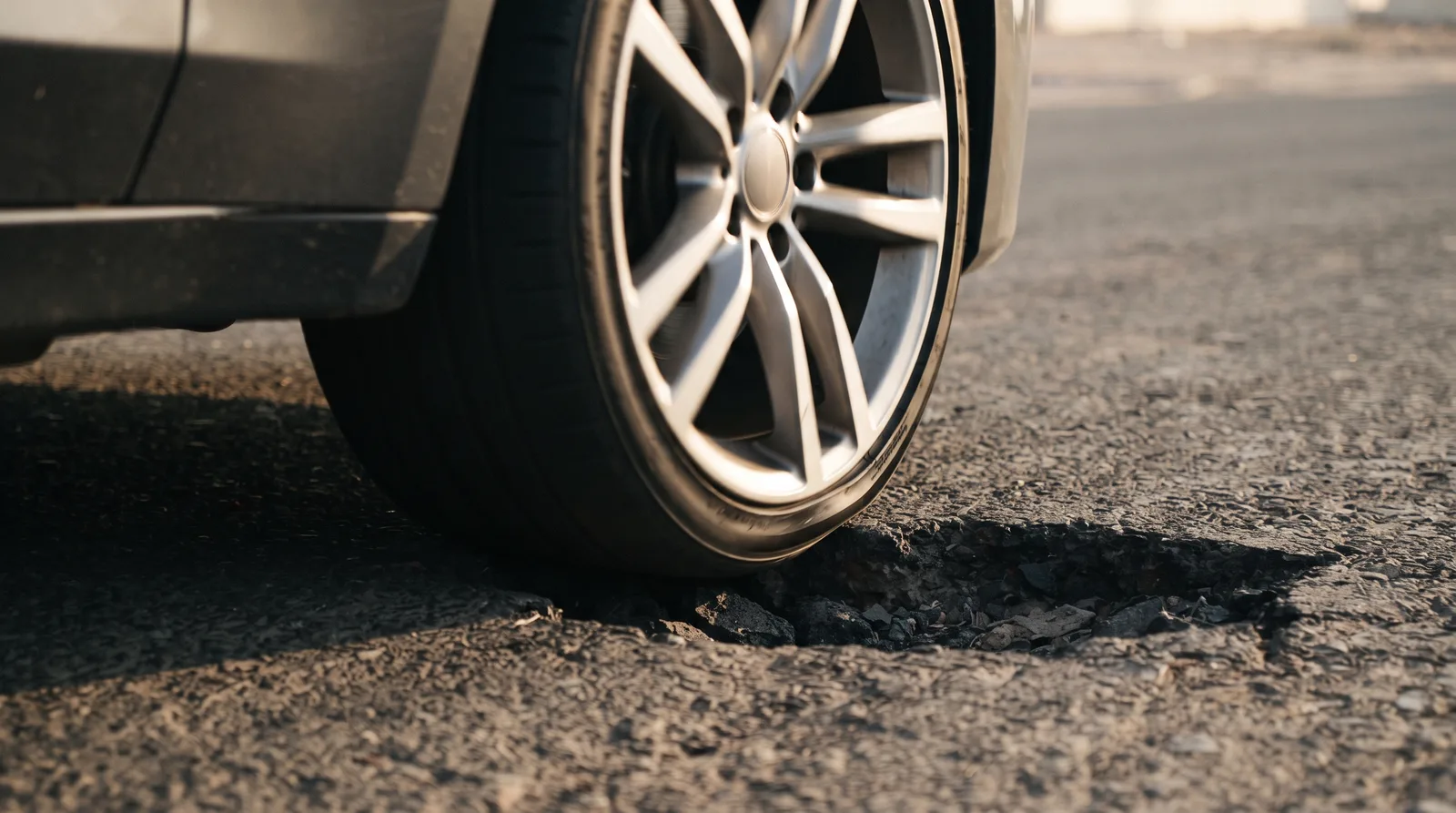
The wheel itself
A tyre shop can only fit a tyre to a wheel that fits the car, and that is a separate set of measurements: the bolt pattern, the centre bore, the width and the offset, which is how far in or out the wheel sits relative to the hub. Get all four from the wheel seller in writing and make sure they match your car - a wheel that bolts on is not the same as a wheel that fits. The wrong offset puts the tyre into the arch on one side or the suspension on the other, and a wheel with the wrong centre bore needs a spacer ring to sit true, otherwise it vibrates no matter how well the tyre is balanced.
Once the wheels are on, treat the car as new: an alignment check, because the change in width and offset shifts the geometry, and the correct cold pressures - which for an XL tyre in a different size may not be the placard figure. Ask the tyre fitter; the answer depends on the load index and the size, not on the number on the sidewall.
Going the other way: smaller wheels
Less common, but sensible for some drivers: a smaller wheel with a taller tyre, keeping the same overall diameter. Owners of cars that came on large wheels do it for comfort, for cheaper tyres, or for desert driving, where a taller sidewall deflates better and protects the rim. The same rules apply in reverse - the diameter stays put, the load index and speed rating do not drop, and the wheel must clear the brakes, which is the limit on how small you can go. Our desert driving guide explains why sidewall height matters in sand.
Registration, insurance and the paperwork
The annual registration test looks at the tyres against the placard - size, load index and speed rating - and a tyre rated below what the car specifies is a fail. Keep the rolling diameter close to original and the ratings at or above the placard and the tyres themselves are not the problem. Beyond that, a change of wheel size is a modification to the car, and it is your insurer you need to tell: an undeclared modification can affect a claim after an accident. A quick call before the wheels go on is cheaper than finding out afterwards.
Frequently asked questions
Do bigger wheels affect the speedometer?
Only if the overall diameter changes. Keep the new wheel and tyre within about 3 percent of the original rolling diameter and the speedometer, odometer and stability systems keep working as intended. A bigger overall diameter makes the speedometer read lower than your true speed.
Do I need XL tyres on bigger wheels?
Very often, yes. A lower-profile tyre in its standard version frequently has a lower load index than the original size, so the XL (extra load) version is what brings it back up to the door placard. Check the load index on the actual tyre, not just the size.
Can I fit wider tyres on my existing wheels?
Within limits. Every tyre size has an approved range of wheel widths from its manufacturer, and going one width up is often possible on the same wheel while keeping the overall diameter within tolerance. Send us your wheel width and current size and we will tell you what fits.
Will bigger wheels pass the registration test?
The test checks the tyres against the placard for size, load index and speed rating, so tyres rated at or above the placard on a rolling diameter close to the original are not the problem. Tell your insurer about the change as well; an undeclared modification can affect a claim.
Do bigger wheels make the car handle better?
A wider, lower-profile tyre can sharpen steering response and dry grip, at the cost of a firmer ride, more noise, more vulnerability to potholes and worse resistance to aquaplaning. On UAE roads most owners are choosing them for the look, and that is a perfectly good reason - as long as the load index, the diameter and the budget for tyres are right.
Not sure what your car needs? Start on our tyre range and filter to your size, or find your nearest branch. We are on Al Nahda Street, Industrial Area 8, Sharjah, open daily from 9:00 AM to 10:00 PM, and our stock runs from Bridgestone and Michelin through to Laufenn. If you would rather send us your size and let us recommend, message our team on WhatsApp at +971 800 525 - a real person will answer. Toll free 800 525.